This article contains affiliate links (PR). We may earn a commission at no extra cost to you.
Oga Namahage 2026 (Dec 31): What It Is, Crowds & Visitor Etiquette
Dates, times and venues come from organizers and official bodies. Our reviewer contributes first-hand bearer experience and etiquette.
Key points
- Every year on the night of December 31, in villages across the Oga Peninsula; 71 districts took part in 2025
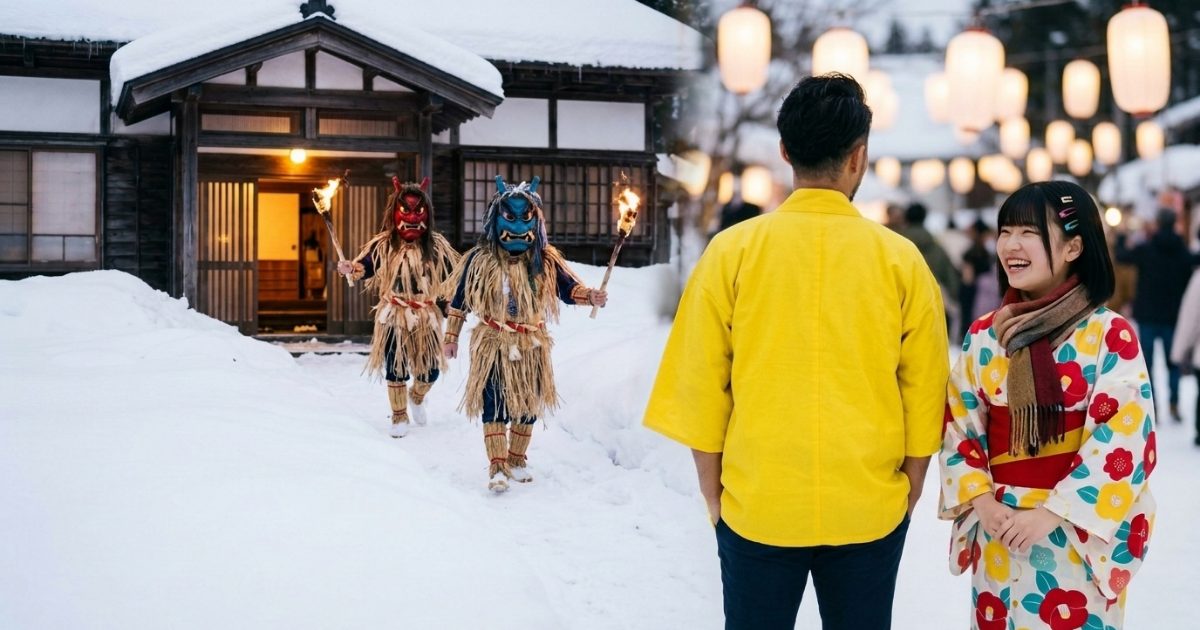
- Young men dressed as Namahage visit homes shouting 'Are there any crybabies here?': a visiting-deity ritual
- Important Intangible Folk Cultural Property and part of UNESCO's 'Raihō-shin' listing (2018)
- It is a home-visiting ritual, not a seated event; no official parking or traffic guidance for visitors was found
Oga Namahage: key facts
Thu, Dec 31, 2026 (tentative)
- Location
- Villages of the Oga Peninsula, Oga city, Akita
- Admission
- No visitor fee information found
Last verified 2026-11-29. Always check official announcements before you go.
Sources
- Oga City – Namahage of Oga(public body・2026-11-29)
- Namahage of Oga (official site)(public body・2026-11-29)
On New Year’s Eve in Akita’s Oga Peninsula, young men from each village dress as Namahage, straw-caped figures in fierce masks, and go from house to house shouting “Are there any crybabies here?” According to the Oga city website, Namahage are visiting deities who warn against laziness, drive away misfortune and bring health and good harvests from fields, mountains and sea. The ritual is an Important Intangible Folk Cultural Property and was added to UNESCO’s Intangible Cultural Heritage list in 2018.
Dates and scale
| Item | Detail |
|---|---|
| Date | Night of December 31 every year (December 31, 2026 is the expected date) |
| Place | Villages across the Oga Peninsula, Oga city |
| Scale | 71 districts held the ritual on New Year’s Eve 2025 |
No separate 2026 announcement was found on the city or official sites; as it is held on a fixed date every year, the date is shown as tentative.
What to know before you go
- This is a ritual that visits homes, not a seated event. Each district’s masks, costumes and manner differ.
- A household receiving Namahage prepares food and drink and welcomes them respectfully, following old customs.
- Namahage carry a kitchen knife and, in some areas, a staff with paper offerings, and wear straw capes, leggings and boots.
Crowd forecast
| When | Crowds | Tip |
|---|---|---|
| Dec 31, daytime | Light | No official visitor event was found. |
| Dec 31, night | Moderate | The ritual takes place at homes in each village; no seating information was found. |
Based on: The Oga city and official site description: a ritual held across the peninsula's villages on the night of Dec 31. No official information on visitor numbers or venues was found, so these levels are only a rough guide.
Parking
No official guidance on parking or traffic restrictions for visitors was found on the Oga city or official Namahage sites. Winter roads in Akita can be icy, so drive with snow tires and extra time, and never park on residents’ roads.
Quick summary
- Night of December 31, in villages across the Oga Peninsula
- A visiting-deity ritual and UNESCO Intangible Cultural Heritage
- No official visitor parking guidance found
- Check the official site for the latest information
FAQ
When does Namahage take place?
On New Year's Eve, December 31, across the Oga Peninsula, according to the Oga city website. It used to be held on Koshōgatsu (January 15) and now takes place on December 31. No specific 2026 announcement was found.
What is Namahage?
Young men from each village dress as Namahage and visit homes shouting phrases like 'Are there any crybabies here?'. Namahage are visiting deities who warn against laziness, drive away misfortune and bring good health and harvests from the fields, mountains and sea.
Is it a UNESCO World Heritage site?
It is on UNESCO's Intangible Cultural Heritage list, not the World Heritage list. On November 29, 2018, Oga's Namahage and other rituals were inscribed as 'Raihō-shin: ritual visits of deities in masks and costumes'.